PeopleReady needed the match, not another form
A branch does not need a longer form. It needs the next person who can take the work.
PeopleReady did not come to us for a homepage widget. A branch desk already knows the question. Who can take this shift, how far will they drive, what ticket do they hold, and can someone call them tonight. Most staffing bots answer that by collecting an email and dumping a job list. Then a recruiter inherits a transcript and starts over.
What we built with Respondable was a dialog that had to commit. Skills. How far. Which days. Then a confidence number, in the open, before it recommended anything. If it was sure enough, it shortlisted shifts. If the person wanted a human, the handoff was a card: the same facts the bot had already pulled apart, not a paste of the chat. The recruiter was not supposed to re-interview someone the software had just interviewed.
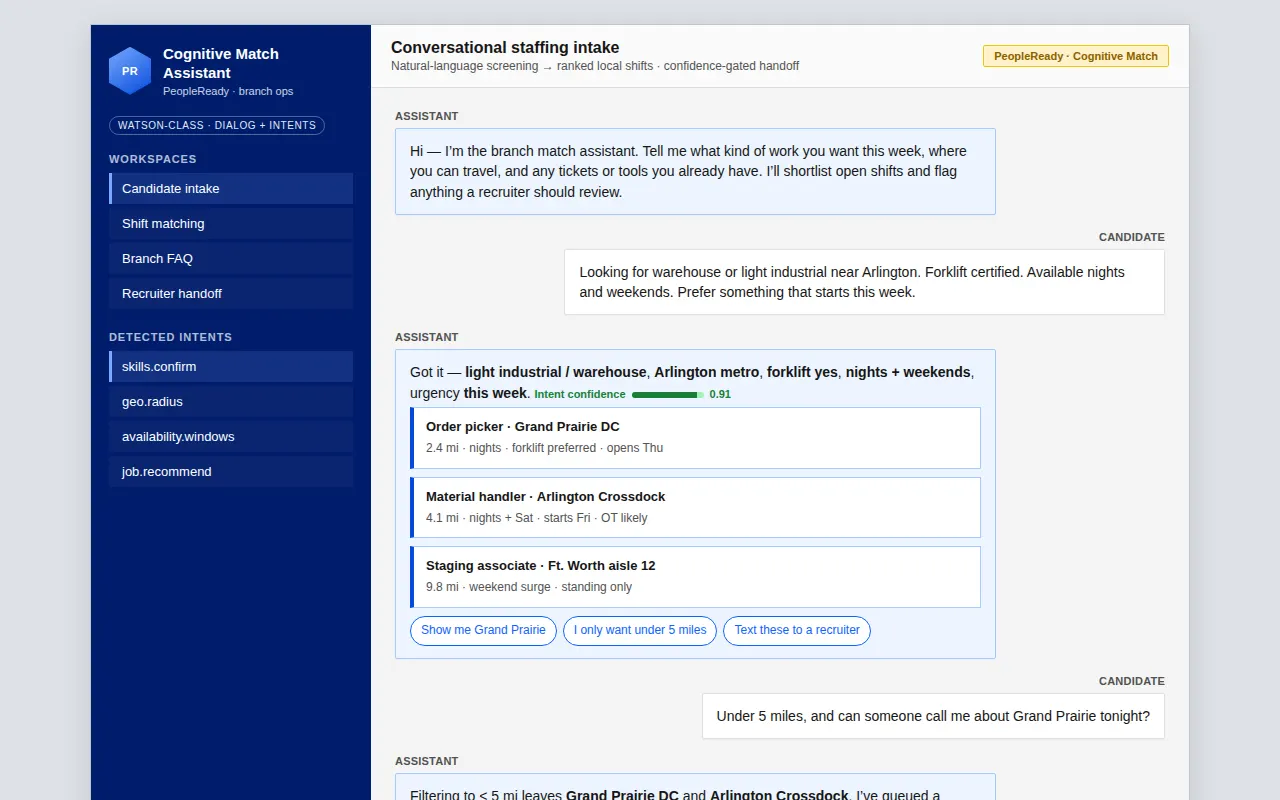
The pieces were boring on purpose. Candidate intake. Shift matching. The questions a branch gets all day, answered the same way twice. And the handoff, which is the only screen that matters. Four intents carried the match: what they can do, how far they will go, when they can work, and which job is actually worth showing. High confidence got a short list. Low confidence got a person. That is the opposite of a bot that is always cheerful and always guessing.
The other half was the paper
A match that cannot be signed off is a suggestion. PeopleReady also needed the content around the work to move: written, approved, shipped. Drafts sitting in an inbox are not a workflow. They are where a campaign goes to wait for someone who is already on the phone. The sign-off was the outcome. Create it, someone says yes, it goes. Same shape as the handoff. A structured yes, not a thread.
We have glued a lot of smaller things since, the N8N and Zapier kind of work you forget to mention because it is plumbing. PeopleReady is the one worth naming because the branch could see the difference. The candidate did not fill out a form with fourteen dropdowns. The recruiter did not read a chat log to find out the person has a forklift card and can work nights. Both of them got the same card.
The sale
Nobody buys "Watson-class intents." They buy a shift that gets filled without the branch doing the interview twice. The bot was allowed to be unsure. That was the feature. A system that always has a job to show you is a brochure. A system that will queue a person, with the facts already pulled out, is a desk.